

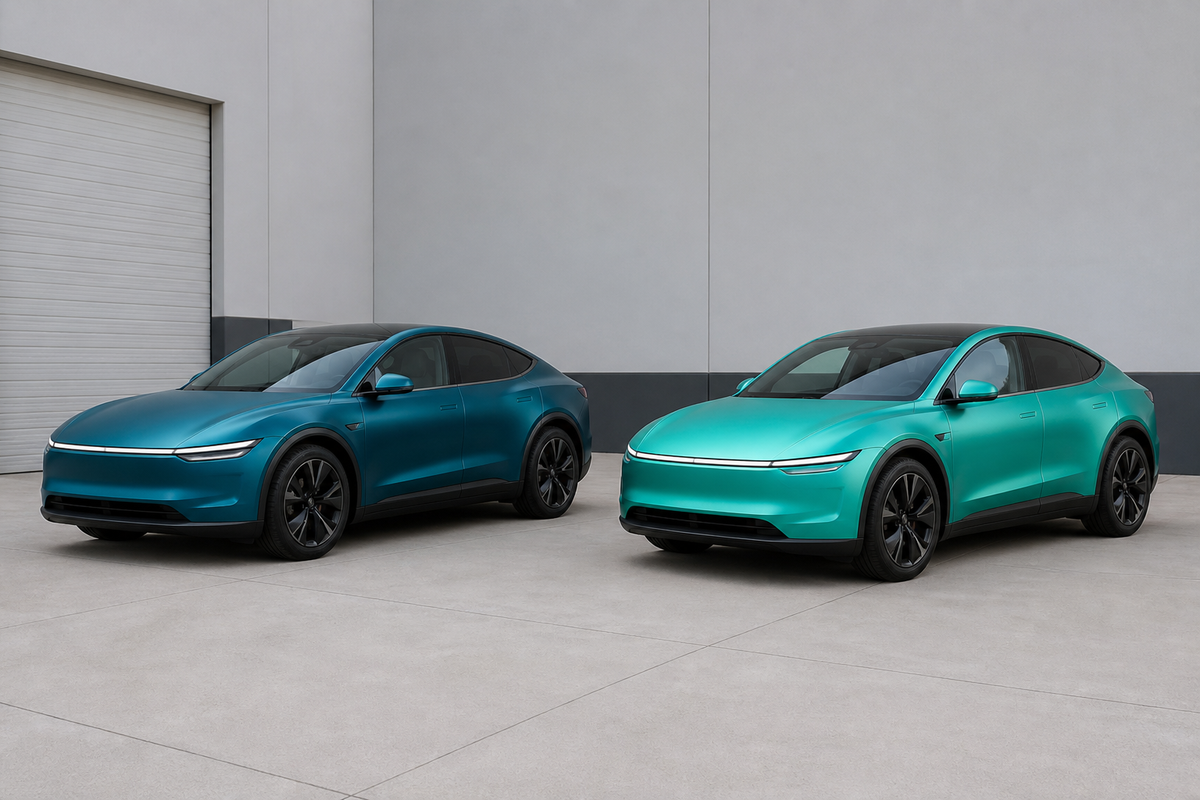
Quick answer: The two options differ in appearance, material behavior and project scope; the decision table below shows the practical tradeoffs. Confirm the exact material, view a physical sample, measure the vehicle and compare the complete installed scope before ordering.
Verified facts for this decision
- Current Metallic Green collection cards show USD 185.99 to 463.99 examples, including a turquoise-green listing. Current source.
- 2026 Honda Civic: 184.8 x 70.9 x 55.7 in, Honda official specifications
- 2026 Subaru Outback: 191.7 x 74.0 x 67.5 in, Subaru official brochure
Choose teal-blue or turquoise-green by light, trim and panel scale.
| Decision | Teal-blue | Turquoise-green |
|---|---|---|
| Undertone | More blue/cool | More green/warm |
| Large SUV panels | Calmer | Brighter |
| Black trim | High contrast | Organic contrast |
Teal and turquoise are not interchangeable
Teal normally balances blue and green with a darker, quieter base. Turquoise green pushes the green-cyan portion brighter and can look almost tropical in direct sun. That distinction matters more than the product name: compare physical samples on the same panel, at the same angle, under open sun, shade, overcast light and the artificial light where the vehicle is parked.
Let the body shape decide how much color travel you want
A low sedan creates long horizontal reflections, so teal can look deep along the door and suddenly blue across the shoulder. A taller crossover breaks the same color into hood, belt-line and upright-door zones. Turquoise green usually stays more visible at distance, while a darker teal rewards close viewing and curved bodywork.
Test the sample beside real trim
Black glass, silver wheels, bronze wheels, unpainted cladding and warm interior colors all change the perceived undertone. Place the samples next to each major material rather than in the middle of an empty door. Photograph the comparison with exposure locked so the camera does not brighten the darker sample and erase the difference you are trying to judge.
Direction and lot control still matter
Metallic and color-shifting films can reveal a rotated door, mirror cap or bumper piece. Mark vehicle-front direction on the liner and cut map before separating panels. If more than one roll is needed, compare the rolls under neutral light before installation and keep a labeled offcut for a possible repair.
Choose a repair boundary before choosing the color
A vivid turquoise repair can expose a small color or direction mismatch. Natural panel breaks at doors, fenders and roof rails make future work easier to contain. Decide whether a damaged door can be replaced alone or whether the visual plan would force an entire side to be redone.
Use the price range as material context
The listed range covers different products and variants, not a single full-vehicle package. Roll length, sale state, freight, taxes, preparation, disassembly, labor and the waste created by bumpers or directional film can move the complete project far beyond the product-card price.
Vehicle-size examples with a verified basis
compact sedan
2026 Honda Civic: 184.8 x 70.9 x 55.7 in, Honda official specifications Lower height reduces tall green side areas but long quarters still reveal undertone shifts. Published dimensions are a verified comparison basis; measure the actual panels, edge returns and aftermarket parts before ordering.
midsize crossover
2026 Subaru Outback: 191.7 x 74.0 x 67.5 in, Subaru official brochure Taller doors and rear quarters make muted teal appear as a larger color field. Published dimensions are a verified comparison basis; measure the actual panels, edge returns and aftermarket parts before ordering.
Price range in USD, checked August 19, 2026
The verified storefront context is $185.99–$463.99 USD. Current Metallic Green collection cards show USD 185.99 to 463.99 examples, including a turquoise-green listing. The range varies with roll length, finish, vehicle panel area, waste allowance, professional labor. It is not a full installed quote, and current availability or sale status should be checked when ordering.
Practical installation guidance
Clean immediately before application and keep the surface dry; avoid overstretching around curves. Read the cited manufacturer guidance. This source supports the stated workflow but does not replace the current technical sheet for the exact film purchased.
- Inspect and photograph paint, repairs, edges, trim, sensors and moving components.
- Approve the exact sample, finish direction and coverage boundaries on the actual vehicle.
- Measure every named panel and build a cut map across the usable roll width.
- Follow the selected film's current instructions for cleaning, application, heat or solution, finishing and curing.
- Inspect after cooling or curing, document the product and lot, and deliver the exact care guidance.
Product and collection links
Use these workbook-verified commercial paths for the current shortlist, then return to WINWAYWRAP for the current store view.
Relevant WINWAYWRAP reading
Questions to settle before approval
Can published vehicle dimensions replace direct measurement?
No. They make the examples transparent and comparable, but they do not describe hood width, bumper depth, edge returns, sensors or aftermarket parts.
Is the low price a full-vehicle price?
No. It is the dated low end of the product or collection context above. Match material family, exact roll variant and equivalent coverage before comparing prices.
Can one manufacturer's installation setting be copied to every film?
No. The cited guidance establishes a non-fabricated workflow basis. The exact selected product's current technical and care documents control the installation.
Approve a physical sample
Screens and edited photographs cannot reproduce every undertone, metallic travel or sheen change. Place the exact teal vinyl sample on the actual vehicle, label its orientation and review it in sun, shade and indoor light. Keep a dated approval photograph with the product handle.
Measure before ordering
Published vehicle dimensions make examples comparable, but they do not give hood width, bumper depth, mirror geometry, edge returns or aftermarket changes. Measure the actual vehicle and draw a panel-by-panel cut map across the usable roll width before selecting a variant.
Inspect the substrate
Record chips, scratches, repainted areas, failing clearcoat, textured plastics, sensors and moving parts. Cleanliness does not repair weak paint. Stop when adhesion or removal risk is unclear, and let the film maker's substrate guidance and a qualified installer control the decision.
Document seams and edges
Mark every planned seam, inlay, relief cut and exposed edge on vehicle photographs. Review those positions from normal viewing distance and close inspection distance. A stable, agreed seam is preferable to an improvised one created after the film has already been overstretched.
Compare complete quotes
Ask each quote to name the exact product, roll length, coverage, preparation, disassembly, labor, contingency and care handoff. Confirm that both Undertone and Large SUV panels are priced against the same panel list. Material-card prices alone cannot make that comparison.
Final decision
Teal Vinyl Wrap vs Turquoise Green: Undertone, Vehicle Shape and Cost should be decided with four records together: the approved physical sample or material objective, the measured cut map, the dated USD source and the exact installation bulletin. If one is missing, keep the project in planning rather than forcing a purchase or an unsupported installation promise.
Share:
Candy Red vs Satin Red Car Wrap: Depth, Light and Body-Line Fit
Candy Red vs Satin Red Car Wrap: Depth, Light and Body-Line Fit