

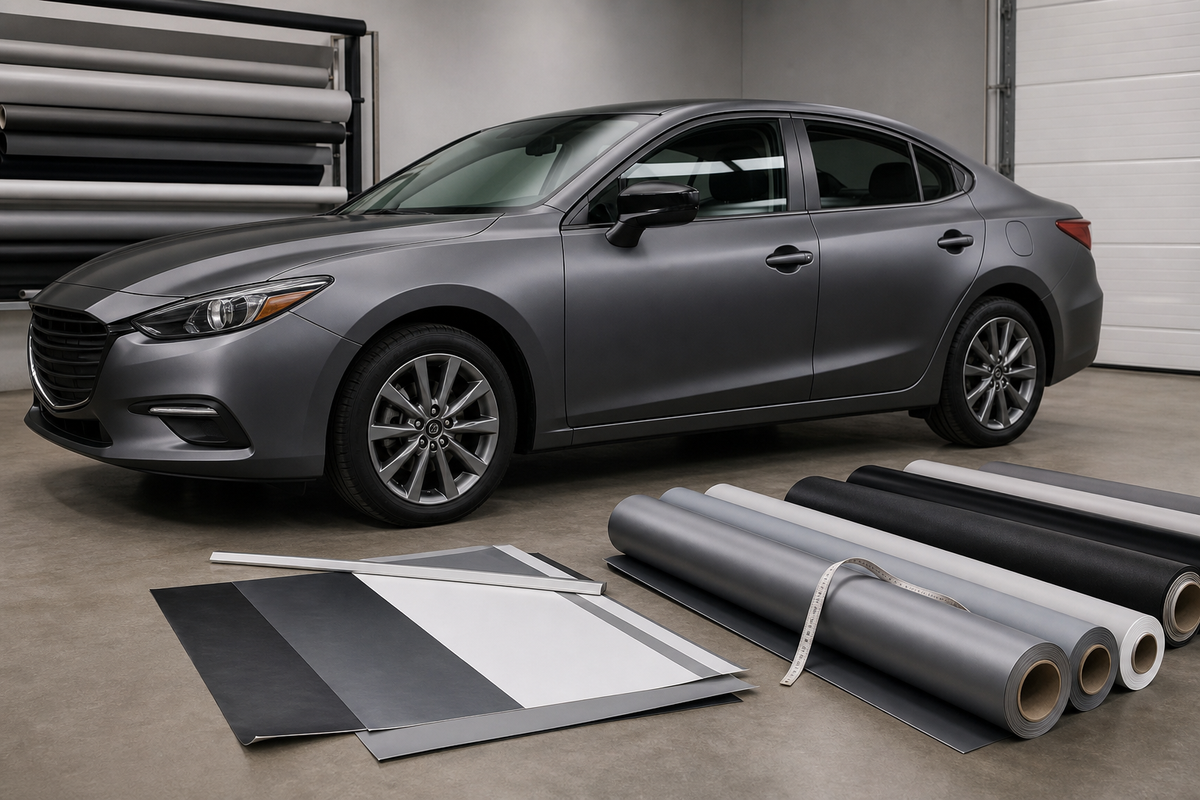
Quick answer: Most full vehicles use 5-foot-wide film. A small coupe often needs about 50–55 linear feet, a sedan 55–60 feet, an SUV 60–75 feet and a pickup or large SUV 70–85 feet. Beginners should add 10–20% for handling, retries and difficult panels.

| Vehicle type | Planning range for 5-ft-wide film | Beginner allowance |
|---|---|---|
| Small hatchback | 45–50 linear ft | Add 5–10 ft |
| Coupe or compact sedan | 50–55 linear ft | Add 8–12 ft |
| Midsize or large sedan | 55–65 linear ft | Add 10–15 ft |
| Crossover or midsize SUV | 60–70 linear ft | Add 12–18 ft |
| Large SUV, van or pickup | 70–85+ linear ft | Measure every panel |
Why vehicle length alone is not enough
A common shortcut is to multiply vehicle length by three. It can create a quick starting point, but it ignores roof width, bumpers, spoilers, large tailgates and panel orientation. A better estimate treats each body panel as a rectangle and includes usable margins on every edge.
Roll width matters. Most color-change installations are planned around film approximately five feet wide because it covers many roofs, hoods and doors without unnecessary seams. Always confirm the actual roll width and available lengths before building your cutting map.
How to measure your car panel by panel
Measure the maximum length and width of the hood, roof, trunk, doors, quarter panels, bumpers, fenders and rocker areas. Add at least four to six inches to each panel dimension for gripping, alignment and edge returns. Record bumpers separately because their curves consume more material than a flat rectangle suggests.
Next, arrange the rectangles along the roll width like a cutting plan. Keep grain, metallic direction or carbon-fiber weave consistent. Directional finishes can create more waste because panels cannot always be rotated to fit an open space.
Full wrap, partial wrap and hidden areas
A color-change exterior normally includes visible painted panels but may exclude door jambs, engine-bay returns and inner hatch areas. Adding jambs can require substantially more film and labor. Define coverage before ordering so the project does not stop with one door unfinished.
Partial projects are easier to calculate: measure the hood, roof or trim section and buy one continuous piece large enough to cover the widest dimensions plus margins. For a first project, extra material from the same production lot is useful for practice and future repairs.
Why you should order extra vinyl
Even professionals allow for waste. A panel may be contaminated, creased or cut short; a bumper may require a second attempt; or a directional finish may need a matching replacement. Ordering 10% extra is a sensible minimum for an experienced installer, while a beginner may prefer 15–20%.
Extra film is especially valuable when color consistency matters. A later roll may come from a different production lot, and subtle shade or gloss variation can be visible on adjacent panels.
Choosing roll length without overbuying
Use the vehicle table as a starting point, then confirm with measurements. WINWAYWRAP products offer multiple lengths, so you can match a full or partial project rather than buying one fixed size. If color is still undecided, compare the matte black wrap collection with other finishes before selecting the final roll.
Material is only one part of the budget. Our 2026 matte black wrap cost guide explains how preparation, vehicle complexity and professional labor affect the finished price.
Final ordering checklist
Confirm roll width, vehicle coverage, panel measurements, directional pattern, installer experience and spare allowance. Check that the largest hood or roof dimension fits the roll width. Finally, label a cutting plan before unrolling material; organized cuts prevent a long panel from consuming film reserved for the opposite side.
Frequently asked questions
Is 50 feet enough to wrap a car?
It may cover a small coupe or hatchback for an experienced installer, but many sedans require closer to 55–65 feet plus an allowance.
How much vinyl do I need for a hood?
Measure the hood’s widest length and width, then add four to six inches on all sides. Many hoods fit within one 5-foot-wide section.
Can leftover wrap be stored?
Yes. Keep it clean, dry, upright or supported, away from heat and direct sun, following the film supplier’s storage guidance.
Final recommendation
Use this guide to shortlist the right material and installation approach, then confirm the exact film specifications, vehicle condition and coverage before ordering. Product instructions and a written installer scope should always take priority over general estimates.
Calculate by panels, not only by vehicle class
A vehicle-type estimate is useful for budgeting, but a panel list is safer for ordering. Record the maximum usable width and length of the hood, roof, trunk, each door, fender, quarter panel and bumper. Measure over the curvature with a flexible tape, then add working margin for positioning and edge returns. Treat mirrors, spoilers, rocker panels and deep bumper sections as separate pieces.
Next, sketch how those rectangles fit within the roll width. Two panels that are individually narrow may still waste material if their required orientation prevents them from nesting. Directional metallic, carbon weave, color-shift and textured films must stay consistent across neighboring panels. Saving a short offcut is not worthwhile if one door reflects differently from the next.
Add waste for skill level and complexity
A confident professional may work close to the panel plan, while a first-time installer needs room for recuts. Add more reserve for bumpers, deep recesses, large one-piece hoods and panels where the liner must be removed before final positioning. Extra material is also useful for a future mirror cap or small repair, but make sure stored film remains clean, dry and within the manufacturer's storage guidance.
Do not assume every five-foot roll fits every panel. Measure wide truck hoods, roofs with gutters and large liftgates carefully. If a single sheet is not possible, decide where a seam or inlay can be hidden before ordering. A planned seam along a body line is usually more controlled than discovering the width problem during installation.
Confirm the final order
Check whether the listed length is feet or meters, confirm usable roll width, and verify that every roll comes from a compatible production lot when color consistency matters. Keep the title, color code and batch information until the job is complete. If professional installation is planned, let the installer approve the quantity; their panel sequence may differ from a generic calculator.
Use this method alongside the vehicle table, then compare available materials and roll options at WINWAYWRAP. A ten-minute panel plan is cheaper than stopping halfway through a color change because the final bumper cannot be cut from the remaining pieces.
Confirm the material before applying the size estimate
Do not transfer a vinyl roll estimate directly to a protection-film project. The difference between colored PPF and PET vinyl affects installation method, panel planning and usable waste, so confirm the material category first.
Share:
Printed Vehicle Wrap vs Color-Change Vinyl: Design, Repair and Cost