

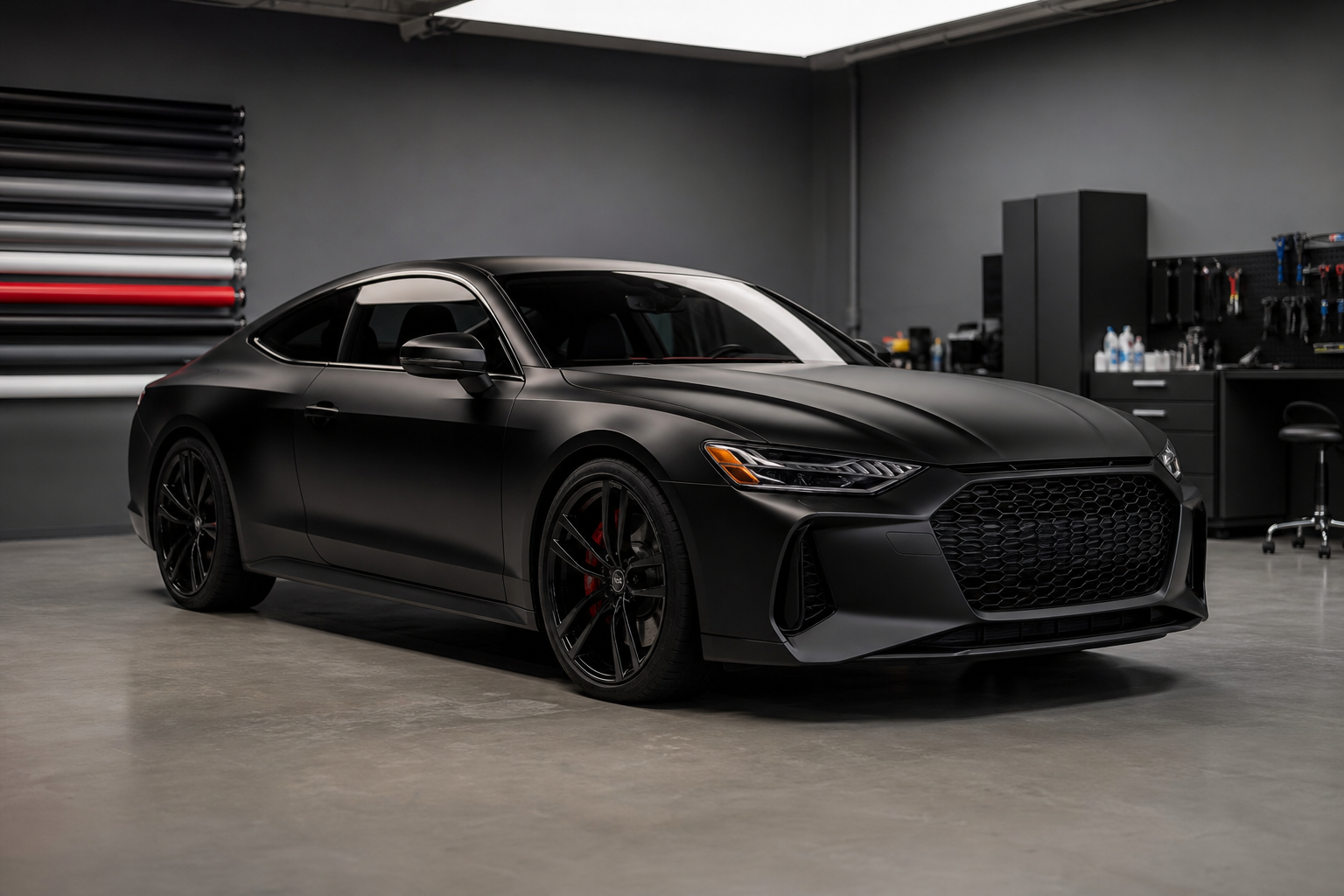
Quick answer: In the United States, a professionally installed full matte black vinyl wrap typically costs about $2,500 to $6,000 in 2026. A compact coupe may fall near the lower end, while a large SUV, truck, exotic, or vehicle with complex bodywork can cost $6,000 to $8,000 or more. A realistic DIY budget is usually $700 to $1,500 for film, tools, preparation supplies, and extra material.
Those figures are planning ranges, not fixed quotes. The final price depends on the vehicle, the condition of its paint, how much trim must be removed, the film selected, and the standard of finish you expect. This guide breaks down each cost so you can compare quotes—or decide whether a DIY project makes sense.

2026 matte black car wrap cost by vehicle type
The fastest way to estimate a full wrap is to begin with vehicle size, then adjust for complexity. The ranges below assume a standard exterior color-change wrap in matte black vinyl. Door jambs, extensive paint correction, old-wrap removal, and specialty detailing are normally additional.
| Vehicle type | Typical professional range | What changes the price |
|---|---|---|
| Compact car or small coupe | $2,500–$4,000 | Simple panels use less film and labor |
| Midsize sedan | $3,000–$5,000 | Bumper shape, mirrors, trim removal |
| Crossover or SUV | $3,500–$6,000 | Greater surface area and taller panels |
| Pickup truck or full-size SUV | $4,000–$7,500+ | Bed, tailgate, roof size, textured trim |
| Luxury, exotic, or highly complex vehicle | $5,000–$8,000+ | Complex curves, disassembly, higher finishing standard |
If you only want a matte black hood, roof, mirrors, or chrome delete, a partial wrap can cost a fraction of a full vehicle. Ask the installer to define exactly which edges, returns, and trim pieces are included before comparing prices.
What is included in a professional wrap quote?
A good quote is more than the price of a roll of vinyl. Professional wrap shops generally price the complete process:
- Vehicle inspection: identifying chips, peeling clear coat, rust, body filler, ceramic coating, and previous repairs.
- Cleaning and decontamination: removing road film, wax, tar, oils, and contamination that can weaken adhesion.
- Disassembly: removing selected handles, badges, lamps, mirrors, seals, or trim so the vinyl can finish cleanly around edges.
- Panel installation: positioning, squeegeeing, heating, stretching, cutting, and post-heating the film.
- Reassembly and quality control: checking seams, recesses, edges, and hardware before delivery.
Surface preparation is not an optional detail. Film manufacturers’ installation guidance consistently emphasizes final cleaning and a full vehicle inspection. Vinyl can conform to a panel, but it cannot repair failing paint, corrosion, deep scratches, or loose clear coat beneath it.
The seven factors that change matte black wrap price
1. Vehicle size and film quantity
A larger vehicle requires more square footage and more working time. Installers also need waste allowance for alignment, safe handling, retries, and sufficient material around panel edges. Buying only the exact visible surface area is a common DIY mistake.
2. Body shape and installation difficulty
Flat doors are relatively efficient. Deep bumpers, sharp recesses, compound curves, vents, spoilers, and complex mirrors demand more skill and time. Two cars with similar exterior dimensions can therefore receive very different quotes.
3. Paint condition and preparation
A clean, sound factory finish is the best starting point. Overspray, adhesive residue, ceramic coating, tar, or poorly repaired paint may require extra preparation. If paint correction or body repair is needed, complete it before wrapping and allow refinished panels to cure according to the paint supplier’s instructions.
4. Coverage level
“Full wrap” does not always mean the same thing. Confirm whether the quote includes the roof, mirrors, spoilers, rocker panels, recessed areas, and edges visible when doors open. Wrapping door jambs creates a more complete color change, but it adds material, disassembly, and labor.
5. Removal of an old wrap
Existing film must normally be removed before a new color-change wrap is installed. Removal cost depends on film age, exposure, adhesive condition, and how easily the material releases. Neglected or over-aged vinyl can take much longer to remove.
6. Film finish and quality
Matte black looks simple, but panel consistency matters. A quality matte black wrap should produce an even, low-reflection appearance across the car. The deepest ultra-matte finishes can also make handling marks or uneven stretch more noticeable, so installer technique remains important.
7. Shop experience, location, and warranty
Labor rates vary by region. An established shop may charge more for experienced installers, controlled indoor conditions, careful disassembly, documented materials, and clear workmanship support. Compare the scope of work—not only the final number.

Professional installation vs. DIY: which costs less?
DIY is cheaper in cash only when the first installation succeeds. For a full vehicle, plan for the film, a heat gun, squeegees, knifeless tape, cutting tools, magnets, cleaning supplies, gloves, edge tools, and spare material. You also need a clean indoor workspace and enough time to learn without rushing.
A practical DIY budget is around $700 to $1,500. The exact amount depends on vehicle size, roll length, tools already owned, and how much extra film you reserve. WINWAYWRAP’s Ridiculous Matte Black car wrap is available in multiple roll lengths, allowing you to match the order more closely to a full or partial project.
Professional installation is usually the better value when the vehicle is expensive, the body has difficult curves, or you expect hidden edges and consistent panel direction. DIY can make sense for an experienced enthusiast, a simpler vehicle, or a small first project such as a hood or roof.
Matte black vs. satin black: does the finish affect cost?
Standard matte and satin films often sit in a similar material price band, so the vehicle and labor usually have a greater effect on the final quote. Their appearance and ownership experience differ:
- Matte black absorbs more light and creates a stealthier, flatter look.
- Satin black adds a soft sheen that reveals body contours more clearly.
- Matte surfaces can show oily fingerprints, polish marks, and uneven cleaning more readily.
- Satin can be a useful compromise if you want low gloss with slightly easier visual upkeep.
If you are still deciding, compare matte with a satin black wrap in daylight before purchasing a full roll. You can also read our guide to matte vs. gloss PET vinyl wrap for a broader finish comparison.
How long does a matte black wrap last?
Service life depends on film construction, installation, climate, storage, washing, and horizontal exposure. A well-installed and properly maintained color-change wrap commonly serves for several years, but a vehicle parked outdoors in intense sun will age faster than one garaged and regularly cleaned.
To protect the appearance:
- Wash by hand with a wrap-safe, non-abrasive cleaner.
- Remove bird droppings, insects, tree sap, and fuel spills promptly.
- Avoid waxes, polishes, and compounds designed to create gloss unless the film maker specifically approves them for matte vinyl.
- Keep high-pressure spray away from vulnerable edges and seams.
- Use covered parking where practical and replace aging film before removal becomes difficult.
For more styling and ownership context, see why black car wraps remain a timeless choice.
How to compare matte black wrap quotes
Ask each shop the same questions so the estimates are genuinely comparable:
- Which film and exact product line will be used?
- Which exterior panels, edges, and trim pieces are included?
- Will badges, handles, mirrors, lights, and bumpers be removed?
- Is paint preparation included, and what conditions cost extra?
- Are seams expected anywhere?
- Is old-film removal or adhesive cleanup included?
- What workmanship support is provided, and what is excluded?
- How should the wrap be washed and maintained after installation?
A very low quote may exclude preparation, disassembly, hidden edges, or post-install support. A high quote may be justified by complex bodywork, door jambs, paint correction, premium finishing, or a labor-intensive vehicle. Written scope is the easiest way to understand the difference.
Is a matte black wrap worth it?
A matte black wrap is worth considering if you want a dramatic, reversible color change without committing to permanent paint. It can unify the vehicle’s shape, create a distinctive low-reflection finish, and offer a removable layer over sound factory paint. It is less suitable if you prefer automatic brush washes, rarely clean contamination promptly, or expect vinyl to hide damaged paint.
For most owners, a sensible 2026 budget is $3,000 to $5,000 for a professionally wrapped sedan, with additional allowance for larger vehicles, difficult panels, jambs, repairs, or removal. DIY buyers should budget beyond the roll itself and treat spare film as insurance rather than waste.
Ready to compare shades and roll options? Explore the full matte black vinyl collection and choose the coverage that fits your vehicle and installation plan.
Pricing in this guide is an estimated U.S. planning range as of 2026. Local labor rates, taxes, vehicle condition, coverage, materials, and installer practices vary. Request an inspection and written quote before authorizing work.
Plan your matte black project with the full material picture
A realistic quote starts with the vehicle, the condition of its paint and the coverage you actually want. Before ordering, compare roll sizes, finishes and installation accessories through WINWAYWRAP, then ask the installer to identify exclusions such as jambs, removal work, damaged clear coat or complex aftermarket parts. A transparent scope makes it much easier to compare two prices fairly.
Share:
Chrome Wrap vs Metallic Wrap: Appearance, Cost, Durability and Installation