

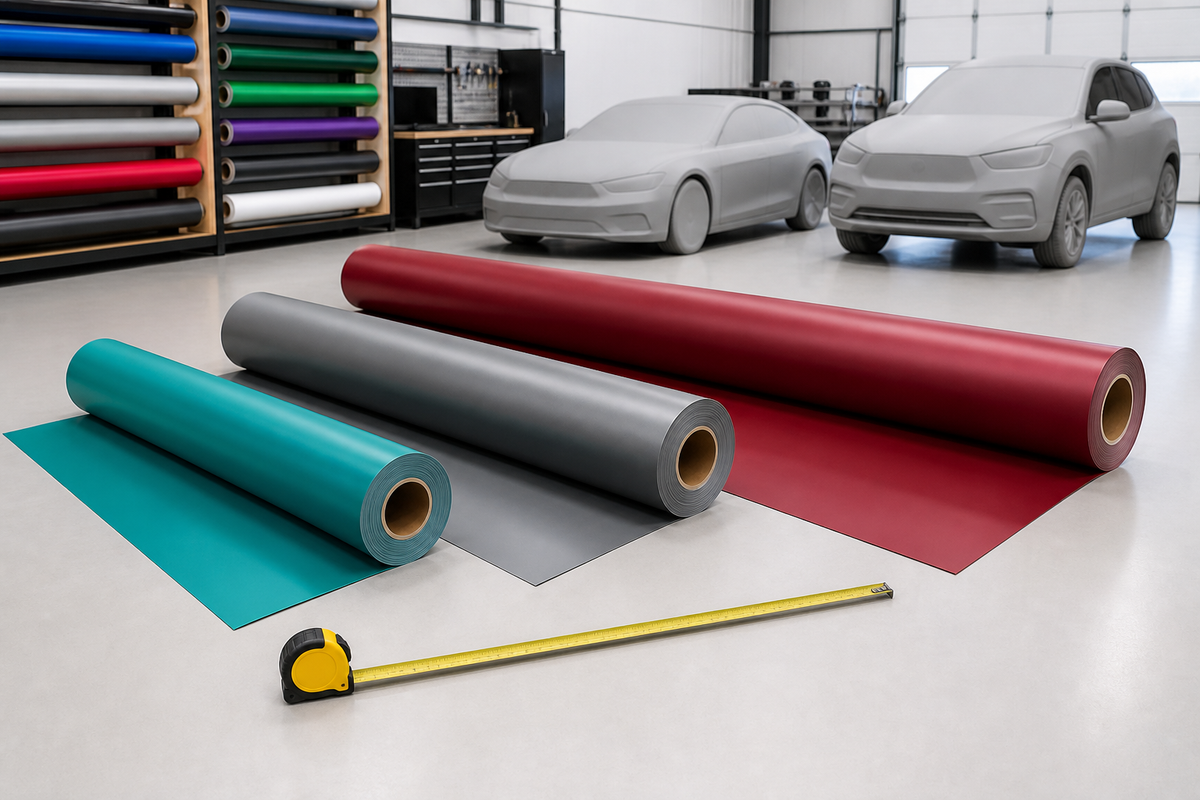
Quick answer: The two options differ in appearance, material behavior and project scope; the decision table below shows the practical tradeoffs. Confirm the exact material, view a physical sample, measure the vehicle and compare the complete installed scope before ordering.
Verified facts for this decision
- Current WINWAYWRAP product pages offer 5-foot-wide rolls in 10, 16, 33, 49, 59, 69 and 79 foot lengths; 5x25/50/75 labels should be treated as planning buckets, not exact listed variants. Current source.
- 2026 Honda Civic: 184.8 x 70.9 x 55.7 in, Honda official specs
- 2026 Subaru Outback: 191.7 x 74.0 x 67.5 in, Subaru official brochure
Choose a roll-size planning band without implying universal fit.
| Planning band | Likely use | Main risk |
|---|---|---|
| About 5x25 ft | Roof/hood/accents | Not enough for full body |
| About 5x50 ft | Compact sedan starting point | Little repair reserve |
| About 5x75 ft | SUV or reserve-heavy plan | Higher leftover cost |
Treat 5×25, 5×50 and 5×75 as planning buckets
WINWAYWRAP's current five-foot-wide product pages list 10, 16, 33, 49, 59, 69 and 79-foot variants. The familiar 25-, 50- and 75-foot labels are useful shopping shorthand, not exact promises about listed stock. Match the cut map to the nearest available variant and verify the current page before ordering.
A 5×25 bucket is usually a partial-project conversation
About 25 linear feet can support roofs, hoods, stripes, selected panels or some motorcycle and compact-component work, depending on dimensions and film direction. It should not be presented as a guaranteed full-car quantity. A single complex bumper can consume more handling film than its visible square footage suggests.
A 5×50 bucket may fit some compact plans but leaves little room for assumptions
Fifty feet is often discussed for small vehicles, yet mirrors, bumpers, roof choices, directional waste, edge returns and a failed piece can change the outcome. Build the measured nesting layout first. If the plan consumes nearly every inch, the apparent saving may disappear when a second order is needed.
A 5×75 bucket creates capacity, not certainty
Larger sedans and SUVs commonly need more linear material, but 75 feet is still not a universal full-size guarantee. Tall doors, long quarters, separate roof sections, complex bumpers and same-lot repair reserve all matter. Use the actual listed 69- or 79-foot option only after mapping the panels.
Roll width controls panel orientation
A nominal five-foot width is 60 inches. Vehicle overall width can exceed that, but overall width is not hood, roof or bumper width. Measure each working surface at its maximum, include edge returns and test whether rotating the piece would violate finish direction. A panel that fits mathematically may not fit in the correct orientation.
Sedan example: Civic and Camry
Honda lists the 2026 Civic at 184.8 inches long, while Toyota lists the 2026 Camry at 193.5 inches. The Camry is 8.7 inches longer overall, but that does not mean adding 8.7 inches to a Civic roll estimate. Door openings, bumper form, roof choice and panel nesting control usable film.
SUV example: RAV4 and Outback
Toyota lists the 2026 RAV4 at 181.0 inches long and 73.0 inches wide, while Subaru lists the current Outback at 191.7 by 74.0 by 67.5 inches. The Outback is longer, yet each vehicle's hatch, cladding, roof hardware and bumper geometry require a separate cut map.
Build the cut map panel by panel
Draw every piece against a 60-inch usable-width strip. Name the panel, record maximum working dimensions, preserve vehicle-front direction and add the installer's chosen handling margin. Place bumpers and compound pieces first because they are harder to nest. Keep a second-attempt location visible for the highest-risk part.
Decide the coverage before choosing length
A full-body estimate changes when the roof stays glass or black, jambs are excluded, mirrors remain factory color, textured cladding is left alone or a contrast hood is planned. Define included and excluded parts in writing. Only then should the map be totaled into a roll variant.
Plan directional and same-lot material
Metallic, pearl and color-shifting films can show panel rotation. Put an arrow on every cut piece and keep all visible panels in a consistent orientation. If the project needs multiple rolls, compare the lots before installation and reserve a labeled offcut for repairs.
Price the usable quantity, not the headline length
Two product pages can show similar per-roll prices while offering different lengths, sale states or material families. Confirm the exact product handle, dimensions, inventory, freight and tax. Add preparation, disassembly, labor and the cost of ordering a second lot if the first roll is too short.
Create a stop condition
Pause if a panel exceeds usable width in the required direction, the exact technical sheet is missing, paint condition is questionable, the roll lot does not match or a sensor and trim plan is unresolved. Discovering the problem on paper is much cheaper than discovering it after the most visible panel has been cut.
Vehicle-size examples with a verified basis
compact sedan
2026 Honda Civic: 184.8 x 70.9 x 55.7 in, Honda official specs Demonstrates why a short roll is accent-only and a near-50/59 ft roll is the practical full-body planning band. Published dimensions are a verified comparison basis; measure the actual panels, edge returns and aftermarket parts before ordering.
midsize crossover
2026 Subaru Outback: 191.7 x 74.0 x 67.5 in, Subaru official brochure Taller body and hatch justify stepping up from sedan quantity and keeping repair reserve. Published dimensions are a verified comparison basis; measure the actual panels, edge returns and aftermarket parts before ordering.
Price range in USD, checked August 19, 2026
The verified storefront context is $175.99–$795.99 USD. Current WINWAYWRAP product pages offer 5-foot-wide rolls in 10, 16, 33, 49, 59, 69 and 79 foot lengths; 5x25/50/75 labels should be treated as planning buckets, not exact listed variants. The range varies with actual listed roll length, finish, vehicle dimensions, panel layout, waste, future repair reserve. It is not a full installed quote, and current availability or sale status should be checked when ordering.
Practical installation guidance
Measure panel-by-panel, add grip and edge allowance, reserve one-direction film consistently and avoid forcing a too-short roll into extra seams. Read the cited manufacturer guidance. This source supports the stated workflow but does not replace the current technical sheet for the exact film purchased.
- Inspect and photograph paint, repairs, edges, trim, sensors and moving components.
- Approve the exact sample, finish direction and coverage boundaries on the actual vehicle.
- Measure every named panel and build a cut map across the usable roll width.
- Follow the selected film's current instructions for cleaning, application, heat or solution, finishing and curing.
- Inspect after cooling or curing, document the product and lot, and deliver the exact care guidance.
Product and collection links
Use these workbook-verified commercial paths for the current shortlist, then return to WINWAYWRAP for the current store view.
Relevant WINWAYWRAP reading
Questions to settle before approval
Can published vehicle dimensions replace direct measurement?
No. They make the examples transparent and comparable, but they do not describe hood width, bumper depth, edge returns, sensors or aftermarket parts.
Is the low price a full-vehicle price?
No. It is the dated low end of the product or collection context above. Match material family, exact roll variant and equivalent coverage before comparing prices.
Can one manufacturer's installation setting be copied to every film?
No. The cited guidance establishes a non-fabricated workflow basis. The exact selected product's current technical and care documents control the installation.
Approve a physical sample
Screens and edited photographs cannot reproduce every undertone, metallic travel or sheen change. Place the exact vinyl wrap by the roll sample on the actual vehicle, label its orientation and review it in sun, shade and indoor light. Keep a dated approval photograph with the product handle.
Measure before ordering
Published vehicle dimensions make examples comparable, but they do not give hood width, bumper depth, mirror geometry, edge returns or aftermarket changes. Measure the actual vehicle and draw a panel-by-panel cut map across the usable roll width before selecting a variant.
Inspect the substrate
Record chips, scratches, repainted areas, failing clearcoat, textured plastics, sensors and moving parts. Cleanliness does not repair weak paint. Stop when adhesion or removal risk is unclear, and let the film maker's substrate guidance and a qualified installer control the decision.
Document seams and edges
Mark every planned seam, inlay, relief cut and exposed edge on vehicle photographs. Review those positions from normal viewing distance and close inspection distance. A stable, agreed seam is preferable to an improvised one created after the film has already been overstretched.
Compare complete quotes
Ask each quote to name the exact product, roll length, coverage, preparation, disassembly, labor, contingency and care handoff. Confirm that both About 5x25 ft and About 5x50 ft are priced against the same panel list. Material-card prices alone cannot make that comparison.
Check material at delivery
Before cutting, match the product name, finish, width, length, lot and packaging to the order. Unroll a small clean section under neutral light. When multiple rolls are required, compare them together and resolve a visible shade or surface difference before installing the first panel.
Use a written acceptance checklist
Inspect finish consistency, contamination, edges, seams, moving parts and sensor openings in open light and side light. Let the material cool or cure according to its instructions, then photograph the accepted condition. Keep care guidance, product record and cut map with the invoice.
Plan the first repair now
Choose the panel most likely to be damaged and ask how it would be replaced. Save the exact product handle, lot, direction, install date and a clean labeled offcut when practical. A good first-day design should not make a normal door or bumper repair unnecessarily broad.
Keep claims tied to the exact material
Do not turn a styling vinyl into a paint-protection claim or assign a PPF property to every film of similar thickness. Construction, adhesive, topcoat, warranty and care are product-specific. Use the current technical sheet for the exact item that will be installed.
Schedule a post-install inspection
Arrange an inspection at the interval required by the selected system and installer process. Review edges, seams, recessed areas, contamination and moving parts after the material has settled. Record corrections so the final ownership file reflects the delivered vehicle, not just the original estimate.
Protect any spare film
Label retained material with product, lot, vehicle-front direction and install date. Store it clean and under the supplier's stated conditions. An unmarked scrap left in a hot trunk is not a reliable shade, finish or repair reference.
Recheck after vehicle changes
Replacement bumpers, repaired paint, aftermarket mirrors, spoilers, racks and flares can invalidate an earlier estimate. Reinspect and remeasure after any change. The altered vehicle becomes the source of truth for access, substrate and cutting decisions.
Define the delivery record
The owner should receive the exact product name, installation date, documented care limits and contact information for inspection or repair. The installer should retain the cut map, lot information, approved sample and photographs of hidden seams. This shared record makes future maintenance more reliable than a generic material description.
Test the process on representative material
Use a clean test piece or approved test area to answer a defined question about finish direction, tool pressure, solution behavior or edge treatment. Record the exact technical instruction used. A test does not replace training, but it can expose an unsuitable assumption before the most visible panel is committed.
Separate appearance from durability
A finish can look substantial without carrying the documented construction of a protective film, and a protective film can leave the original color mostly unchanged. State the selected material family and intended use plainly. Avoid implying impact, stain or self-healing performance unless the exact product documentation supports it.
Keep unresolved assumptions visible
Mark estimates, visual inferences and unavailable product details as provisional. Resolve them against the actual vehicle, current product page and technical sheet before cutting. A transparent stop point protects the paint, the schedule and the budget when evidence does not support the original plan.
Final decision
Vinyl Wrap by the Roll: 5×25, 5×50 or 5×75 for Sedan and SUV Projects? should be decided with four records together: the approved physical sample or material objective, the measured cut map, the dated USD source and the exact installation bulletin. If one is missing, keep the project in planning rather than forcing a purchase or an unsupported installation promise.

Share:
Printed Vehicle Wrap vs Color-Change Vinyl: Design, Repair and Cost
Satin Chrome vs Mirror Chrome Wrap: Reflection, Panel Complexity and Budget