
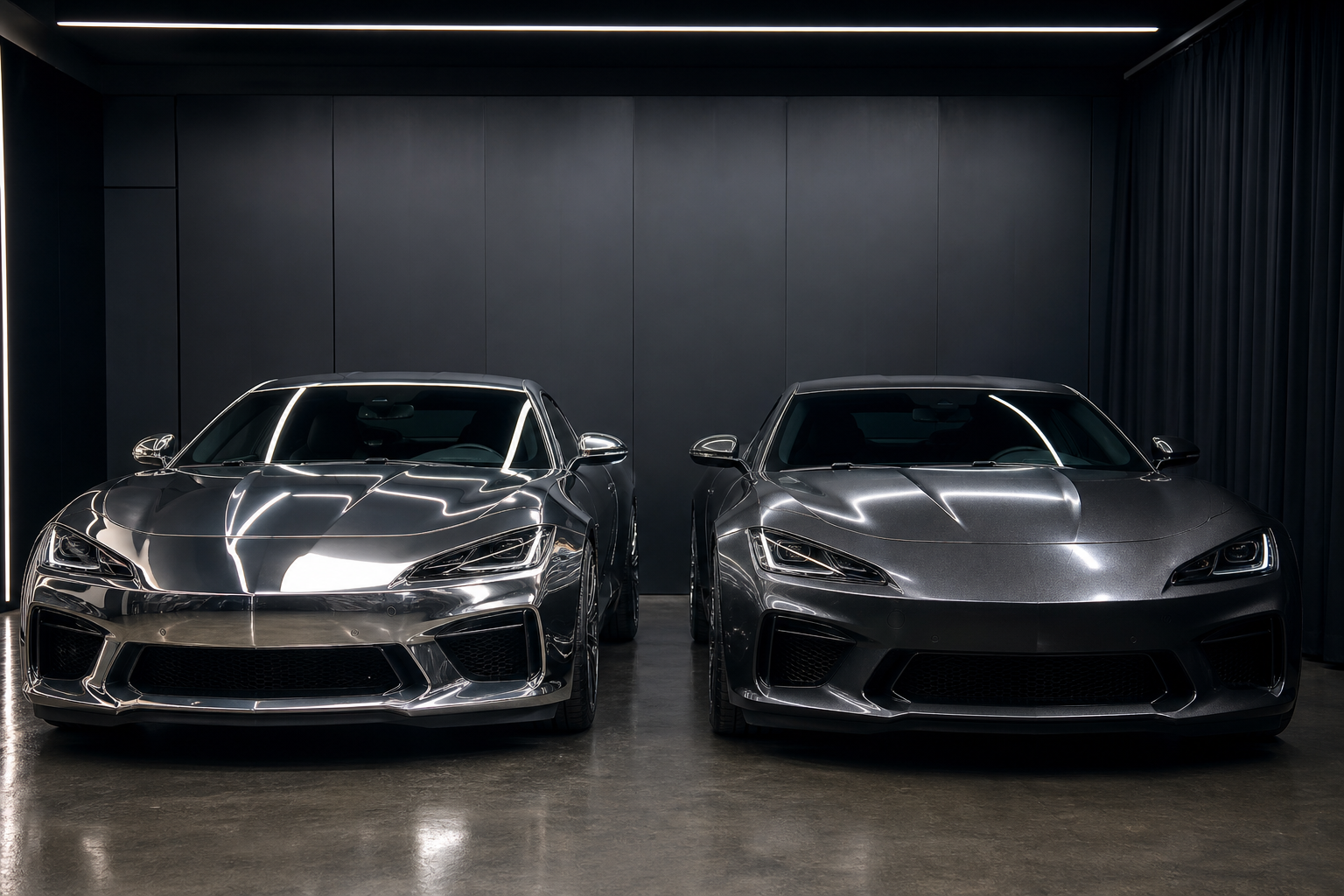
Quick answer: Chrome wrap produces a mirror-like surface and maximum visual impact, while metallic wrap looks more like automotive paint with fine reflective particles. Chrome is generally more demanding to install and maintain; metallic is the more practical full-vehicle choice for many daily drivers.

| Factor | Chrome wrap | Metallic wrap |
|---|---|---|
| Reflection | Mirror-like and highly directional | Paint-like sparkle and softer highlights |
| Installation | High difficulty; sensitive surface | Moderate; similar to many color-change films |
| Cost | Usually higher material and labor | Usually closer to standard premium wrap |
| Daily care | Shows marks and contamination quickly | More forgiving depending on color |
| Best use | Show cars, accents, statement projects | Full vehicles and daily-driven custom color |
How the finishes look
A chrome wrap behaves like a colored mirror. Strong reflections follow every curve, so the vehicle can look dramatically different as the viewing angle changes. Chrome is an effect finish rather than a substitute for ordinary silver paint.
A metallic wrap uses fine reflective elements to create depth without a true mirror. It emphasizes sunlight and body contours while retaining a recognizable paint-like appearance, making it easier to integrate into everyday styling.
Material and labor cost
Chrome film commonly costs more and can increase labor because the surface is easy to mark, stretch limits may be tighter and complex panels may require planned inlays. Metallic wraps generally install more like conventional color-change vinyl, although directional flake still demands panel planning.
Quotes should state the exact film, coverage, seams, inlays and disassembly. A lower price is not a bargain if the installer forces chrome through deep recesses or leaves uncontrolled tension at edges.
Installation difficulty
Chrome requires exceptionally clean gloves, squeegee protection and controlled heat. Overstretch can haze or alter reflectivity, while a careless tool can scratch the face. Some chrome films have specific restrictions on heat settings, relief cuts and finishing tools.
Metallic vinyl is more forgiving, but panel orientation matters. Rotate one door or fender and the metallic direction may change under sunlight. Mark the roll direction before cutting and keep adjacent panels consistent.
Durability and exposure
Durability depends on the exact product, installation, climate and panel angle. Horizontal surfaces receive more sun and weather than vertical doors. Highly reflective chrome can show environmental wear sooner and may have different warranty terms than standard colors.
Store the vehicle under cover when practical, clean contamination quickly and inspect edges regularly. Never assume one maintenance product is compatible with both finishes.
Care and legal considerations
Hand washing is safest. Use a soft microfiber cloth and non-aggressive soap; chrome in particular can scratch if wiped dry or cleaned with rough paper. Avoid automatic brush washes and keep pressure spray away from seams and edges.
Mirror finishes can be regulated because of glare or vehicle-color rules. Check local laws and insurance requirements before wrapping a full car in chrome. The owner remains responsible for compliance.
Which one is right for you?
Choose chrome when visual impact matters more than simplicity and you have an installer experienced with that exact film. Choose metallic for a sophisticated custom color, more conventional care and a finish suited to frequent driving. If uncertain, wrap a mirror, roof or accent panel before committing to a full chrome vehicle.
Frequently asked questions
Is chrome wrap more expensive than metallic wrap?
Usually yes because both the material and specialist installation can cost more.
Can chrome wrap cover deep bumpers?
Sometimes, but inlays and seams may be safer than extreme stretching. Follow the specific film bulletin.
Does metallic wrap have to face one direction?
Many metallic films are directional. Keep orientation consistent across adjacent panels.
Final recommendation
Use this guide to shortlist the right material and installation approach, then confirm the exact film specifications, vehicle condition and coverage before ordering. Product instructions and a written installer scope should always take priority over general estimates.

Chrome and metallic react to the environment differently
Chrome borrows its appearance from everything around it. Buildings, road markings, trees and studio lights become recognizable shapes across the body, which makes a parked vehicle look active even when the color is neutral. Metallic vinyl keeps a base color and adds fine reflective interest. Its highlights brighten in direct sun, but the panel still reads more like conventional automotive paint.
This difference affects design. A full chrome vehicle is visually dominant and may overwhelm elaborate wheels or graphics. Metallic is easier to combine with black roofs, carbon accents or factory trim. If the goal is an everyday color change that remains expressive, metallic usually offers the broader comfort zone. If the goal is a show-car statement, chrome delivers an effect that ordinary metallic cannot reproduce.
Check local rules before choosing a mirror finish
Highly reflective vehicle finishes may attract specific road, inspection or registration requirements depending on location. Rules can also differ for windows, lights, emergency-style colors and commercial markings. Check the authorities and insurer responsible for the vehicle before purchasing material. A product being available for sale does not guarantee that every full-body application is permitted on public roads.
Color-change reporting may also be required even when the vinyl is removable. Keep invoices and product information, photograph the original paint, and ask the installer how seams and identification labels will be handled. This documentation helps with care, repair and eventual removal.
Why chrome installation often costs more
Chrome's face can be sensitive to tool marks, overheating and excessive stretch. Installers may spend more time protecting the surface, using templates and planning inlays around bumpers or recesses. The visual penalty for a flaw is high because one hazed or distorted area interrupts a continuous reflection. Some films also have less conformability than standard color-change vinyl, making panel selection critical.
Metallic films are generally closer to familiar wrapping behavior, but they are not direction-free. Flake orientation, roll direction and stretch can change how neighboring panels look in sunlight. A professional workflow labels every cut and checks the vehicle from several angles before final trimming. Correcting a rotated door later consumes both labor and material.
Durability depends on more than the finish name
Do not assume all chrome films have one service life or that all metallic films last longer. Construction, manufacturer, color, climate, horizontal exposure, installation tension and maintenance all matter. A roof and hood receive more ultraviolet and heat exposure than a shaded vertical door. Specialty colors can have different warranties from standard colors in the same product family.
Request the exact technical data and warranty, including exclusions for horizontal panels or harsh climates. Ask how edge failure, staining, scratches and accidental damage are handled. A well-defined product and installation warranty is more useful than a broad claim that a finish will last a certain number of years.
Care, repair and replacement
Wash both finishes gently and remove contamination promptly. Chrome needs especially soft contact materials because fine scratches are easy to see. Avoid aggressive polishing unless the film maker specifically approves it. Metallic may be more visually forgiving, but abrasive correction can still damage its top layer or alter gloss.
Repairs are easier when the installer records the product name, color code, batch and panel direction. A replacement chrome panel may reflect differently if it is stretched or oriented another way; metallic may show a flake-direction mismatch. Keeping a clean offcut helps identify the material, though stored film must remain within recommended conditions.
A practical choice framework
Choose chrome for maximum visual impact, a show-oriented build and an owner prepared for higher material, labor and care demands. Choose metallic for paint-like depth, easier integration with other styling elements and a more forgiving daily-driver appearance. For either option, obtain large samples and examine them on the vehicle outside.
Compare verified chrome and metallic collections through WINWAYWRAP, then have the installer confirm panel feasibility before buying. The best finish is the one whose appearance, legal context, installation plan and maintenance requirements all fit the same project.
Use a quote comparison that exposes hidden differences
Put competing quotes into the same checklist: product line, roll size, full or partial coverage, jamb treatment, disassembly, preparation, seam locations, expected completion time, aftercare and written warranty. Chrome work may include more inlays and surface-protection steps; metallic work may require strict directional cutting. A quote that names these operations is easier to evaluate than one number labeled “full wrap.”
Ask whether the shop will provide progress photographs of difficult areas and a final edge inspection. Confirm the process for replacing one damaged panel and whether matching material will be reserved. A slightly higher initial price can be rational when it includes predictable repair support and clearly defined workmanship.
Evaluate samples on vertical and horizontal panels
Place the sample on a door and then on the hood. Chrome reflections can become intense on broad horizontal surfaces, while metallic flake may look brighter or darker as the angle changes. This test also helps identify whether the chosen color works with glass, trim and wheels rather than only with showroom lighting. Repeat the check in midday sun and overcast shade before approving the material.
Use a silver sample to judge reflection and flake
A silver finish makes the distinction especially easy to see. Compare a bright gloss metallic ice silver wrap with a mirror-chrome swatch in direct sun, shade and garage lighting; metallic should retain visible flake and paint-like depth instead of acting like a continuous mirror.
For a broader look at flake, color and lighting behavior, continue with this metallic vinyl finish overview.
Share:
How Much Does a Matte Black Car Wrap Cost? 2026 Price Guide
Gloss Black vs Piano Black vs Satin Black Wrap: Which Finish Should You Choose?