

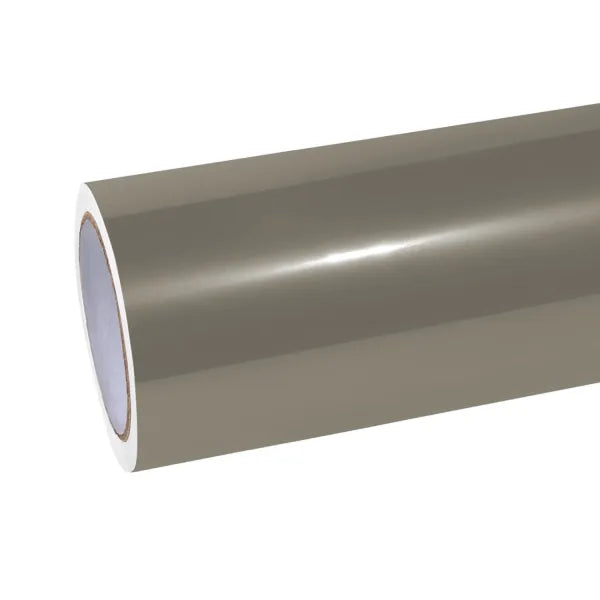
Quick answer: brown copper colored PPF is worth shortlisting when Full panels needing one material system. Compare it with Metallic brown vinyl, approve a large sample in real lighting, measure the actual vehicle, and treat the current $359.99–$2,029.99 USD range as material-only context—not an installed quote.

Practical details for choosing a wrap
- Key detail: The mapped brown-copper PPF product lists 5 ft width, 10-79 ft lengths and a USD 359.99-2,029.99 material range. Source: official source. Variant lines read on 2026-08-06.
Compare brown-copper material routes
| Option | Appearance | Best fit | Main question |
|---|---|---|---|
| Brown copper colored PPF | Gloss liquid-metal travel | Full panels needing one material system | Are protection claims documented for this SKU? |
| Metallic brown vinyl | Styling-focused flake | Budget-led color change | What dry-application bulletin controls it? |
| Copper accents | High contrast on selected panels | Mirrors, roof or lower body | Will partial coverage create unwanted edges? |
The table is a screening tool. It does not turn one material family's specification into another's. Ask for the exact product data sheet and compare physical samples on flat and curved surfaces before approving a full vehicle.
Vehicle-size examples with a documented basis
compact pickup (2026 Ford Maverick XL)
199.8 in long and 72.6 in wide in Ford's 2026 specifications (official source) Use for a cab, bed-side and tailgate planning example rather than treating a pickup as one box. Overall dimensions are a planning basis, not a substitute for measuring the hood, roof, bumpers, doors, bed, rails, spoilers and edge returns on the actual vehicle.
full-size pickup (2026 Ford F-150)
232.0 in overall length on Ford's 2026 model page (official source) Use as the larger pickup example where long bedsides and a separate tailgate materially affect the cut map. Overall dimensions are a planning basis, not a substitute for measuring the hood, roof, bumpers, doors, bed, rails, spoilers and edge returns on the actual vehicle.
Material price on August 6, 2026
The United States storefront showed a $359.99–$2,029.99 USD material range on August 6, 2026. The source was the live product record. This is a roll, variant or clearly disclosed cross-product comparison range, not a professional installation quote. Taxes, local labor, disassembly, paint correction, freight exceptions and failed-panel allowance can change the project total.
Budget variables to record before ordering:
- selected roll length and usable 5 ft width
- measured panel map and handling allowance
- surface preparation and parts removal
- installer labor and local market
- directional waste, repairs and spare material
A non-fabricated installation plan
Label metallic direction before cutting cab, bedsides and tailgate, and use the exact colored-PPF wet-installation and edge guidance rather than a vinyl procedure. Basis: manufacturer instructional bulletin. Documented 3M PPF workflow used only as process guidance; exact solution, temperature and edge instructions must come from the purchased WINWAYWRAP film documentation.
- Inspect paint, repairs, rust, clear-coat failure and trim before discussing adhesion.
- Define coverage: visible exterior only, jambs, roof, bed, spoilers, rails and removable parts.
- Measure every panel at its widest points and add handling margins before making a cutting map.
- Approve color and sheen in sun, shade and artificial light; photograph the approved sample as a reference.
- Clean and prepare only with methods allowed by the exact film and substrate documentation.
- Label roll direction and vehicle-front direction before cutting any metallic, pearl, carbon or color-shift material.
- Use heat, edge treatment and post-heating only as the purchased film's current instructions specify.
- Inspect edges, seams, recesses and finish consistency after the film cools, then document care and removal guidance.
Explore suitable wrap options
Browse WINWAYWRAP and compare these relevant choices:
Continue with these related guides:
How to read the finish on a real vehicle
Do not approve brown copper colored PPF from a phone screen alone. Hold a large sample vertically on a door, horizontally on a hood or roof, and across a curve. View it from the front, rear and both sides. The first table option, Brown copper colored PPF, is described here as Gloss liquid-metal travel; the second, Metallic brown vinyl, behaves differently because Styling-focused flake. That difference can be more important than the color name.
Small-vehicle and large-vehicle ordering logic
The compact pickup (2026 Ford Maverick XL) is the smaller planning example in this article, while the full-size pickup (2026 Ford F-150) represents a different panel count or body form. A larger overall footprint does not translate directly into one multiplier: bumpers, tall hatches, pickup beds, removable roof pieces and directional waste consume film differently. Build a panel-by-panel cut list and reserve material from the same production lot for the most visible repair.
Three budget checkpoints
Material checkpoint: confirm width, length, finish and availability against the dated source. Preparation checkpoint: obtain a separate allowance for cleaning, correction and parts removal. Installation checkpoint: ask whether bumpers, mirrors, spoilers, sensors, bedsides or roof hardware require extra pieces or seams. Keeping these checkpoints separate prevents a low roll price from being mistaken for a complete project cost.
Direction and lot control
Record the roll label, lot, chosen vehicle-front direction and cutting order. Adjacent doors should not be rotated simply to save a short offcut if that rotation changes metallic flop, pearl travel, carbon weave or color shift. If the finish is not directional, written labels still help preserve repeatability during repair. Save a clean labeled offcut for future color matching rather than using every square foot.
Surface and edge decisions
Sound factory paint, refinished paint, textured plastic, rubber, glass and powder-coated parts are not interchangeable substrates. The installer should identify exclusions in writing. Decide whether edges wrap around, terminate at a body line or use an inlay. A visible, well-planned seam can be safer than stretching one piece beyond the exact film's documented conformability.
Frequently asked questions
Is brown copper colored PPF priced at $359.99?
$359.99 was the low end of the cited material listing on August 6, 2026. It is not a complete installed price and may represent a shorter roll, a related comparison product or a promotional option; the source note states which.
Can overall vehicle dimensions tell me exactly how much film to buy?
No. They make examples comparable, but the installer still needs a panel-by-panel cutting map, coverage definition and waste allowance.
Can I copy a temperature from this guide?
No. Use the purchased film's current technical sheet. The linked manufacturer bulletin supports the workflow, not a universal heat setting.
Should I choose the finish from an online photo?
No. Screen color, exposure and editing can hide undertone, sheen and directional behavior. Approve a physical sample in several lighting conditions.
What should remain after installation?
Keep the invoice, exact product name, lot record, care guidance, removal guidance and a labeled spare offcut when practical.
Decision
Plan a metallic brown-copper colored PPF project with consistent panel direction by combining four records: the approved sample, the measured cut map, the dated USD material range and the exact technical sheet. If any one is missing, pause the order or keep the project as a draft quote. That approach protects the decision from attractive photos, incomplete pricing and borrowed specifications.
Share:
6D Carbon Fiber PPF Guide: Pattern, Coverage, Sizing and Cost
Tiffany Blue Colored PPF: Coverage, Vehicle Fit, Sizing and Price