

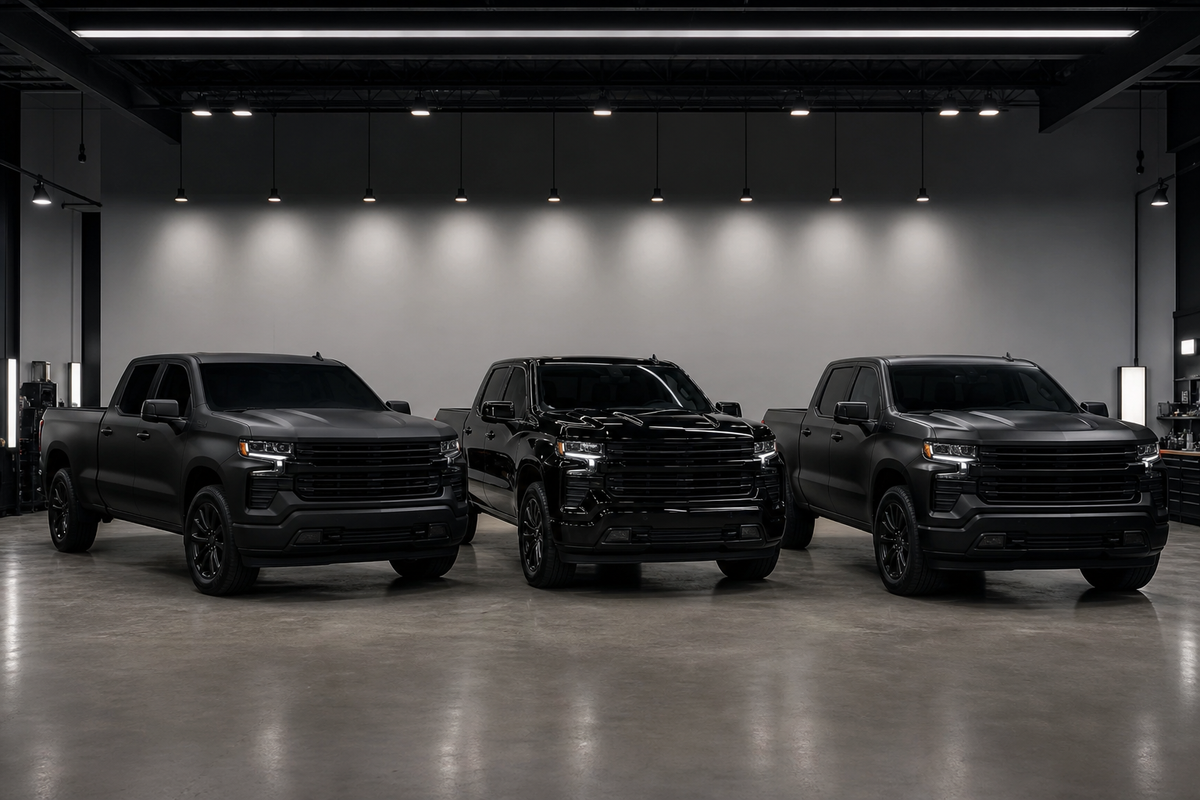
Quick answer: Matte black gives a truck a rugged low-reflection look, gloss black resembles deep polished paint, and satin black balances both. Trucks need more film than most cars, and beds, tailgates, cab seams, textured trim and large roofs make planning especially important.

| Finish | Truck appearance | Ownership trade-off |
|---|---|---|
| Matte black | Rugged, stealthy and broad | Shows oily marks; no polishing |
| Gloss black | Deep and paint-like | Shows dust and wash marks |
| Satin black | Modern, sculpted highlights | Balanced but still needs finish-safe care |
Why trucks require a different wrap plan
A pickup combines large flat panels with difficult transitions around the bed, tailgate, cab corners, mirrors and bumpers. Full-size trucks can require 70–85 feet or more of five-foot-wide film, depending on coverage and skill. Measure rather than ordering from vehicle class alone.
Decide whether the bed interior, roof, door jambs, textured flares and bumper components are included. Vinyl generally performs best on smooth, sound painted surfaces; heavily textured plastic may not be suitable.
Matte black truck wrap
A matte black wrap reduces reflections and makes a large truck feel visually solid. It works well with off-road wheels, dark trim and utilitarian styling.
Matte surfaces cannot be polished like gloss paint. Fingerprints, fuel and oily contaminants should be cleaned with approved products before they create uneven-looking areas.
Gloss black truck wrap
A gloss black vinyl wrap gives the most conventional paint-like result and emphasizes long bedside reflections. It suits luxury trucks, street builds and two-tone combinations.
Because truck panels are large, surface preparation and consistent squeegee technique are visible. Dust, stretch marks or mismatched panel direction can interrupt reflections across the bed and doors.
Satin black truck wrap
A satin black wrap keeps enough sheen to show muscular body lines while hiding some of the visual intensity of dust and fine marks. For many daily-driven trucks, it is the most balanced black finish.
View satin outdoors before choosing. Under weak indoor light it can resemble matte, but sunlight reveals a noticeably smoother highlight.
Cost, film quantity and installation
Truck wrap cost rises with surface area, disassembly and panel complexity. Bed accessories, racks, toolboxes, flares and old graphics add labor. Door jambs and full tailgate returns should be specified in the quote.
Large flat sides are not automatically easy; handling a long sheet without contamination or premature contact requires space and at least two people. Plan seams away from high-visibility areas and follow the film maker’s overlap rules.
Remove compatible bed rails, badges and lamps when that creates safer edge access, but document every fastener and follow vehicle-service procedures. Where removal is unsafe, use deliberate inlays or clean termination lines instead of forcing vinyl beneath fixed hardware. A bed cover should be measured and quoted separately because its material and movement may require a different solution.
Care for a black wrapped truck
Hand wash when possible, rinse mud and road salt promptly and avoid aiming high-pressure water into edges. Inspect the leading edge of the hood, wheel arches, bed corners and tailgate because these areas see frequent impact and handling.
For overall pricing context, compare your estimate with our matte black wrap cost guide, then request a truck-specific inspection.
Frequently asked questions
How much vinyl is needed for a full-size truck?
Often 70–85 feet or more of five-foot-wide film, but bed configuration and coverage require panel-by-panel measurement.
Can vinyl cover textured truck trim?
Many textured plastics do not provide a reliable smooth adhesive surface. Test the exact material or leave the trim exposed.
Which black finish hides dust best?
Satin is often the most visually forgiving, while gloss and piano-like surfaces reveal dust most readily.
Final recommendation
Use this guide to shortlist the right material and installation approach, then confirm the exact film specifications, vehicle condition and coverage before ordering. Product instructions and a written installer scope should always take priority over general estimates.
Account for truck-specific panels
Pickup trucks combine large flat areas with difficult edges. Long bedsides show contamination and squeegee inconsistency, while tailgates, flares, step pockets, lights and bed accessories interrupt normal panel access. List toolboxes, racks, covers, badges and aftermarket trim before requesting a quote. Removing compatible parts can improve the edge, but every component must be handled according to service procedures.
Measure cab and bed separately. Crew cabs, long beds and full-size tailgates can move a project far beyond a generic vehicle estimate. Bed caps or textured plastic may not accept ordinary color-change vinyl reliably. Test questionable substrates and leave unsuitable trim exposed rather than creating a short-lived wrapped patch.
Choose a finish for the way the truck is used
Gloss black suits street and luxury builds, but long reflections make dust, wash marks and panel defects easy to see. Matte looks purposeful on off-road trucks, yet oily fingerprints, fuel and mud stains need prompt finish-safe cleaning. Satin offers a middle ground: it shows body contours while remaining less visually intense than full gloss.
Work use also matters. Frequent loading affects tailgate edges, bed corners and lower panels. Vinyl is a styling layer, not armor against tools, gravel or repeated boot contact. Consider replaceable accent sections or appropriate protective material in high-wear zones instead of expecting one decorative film to solve every impact risk.
Installation and maintenance plan
Large sheets require clean space and often two people. Mark roll direction, plan seams away from obvious sight lines and avoid excessive stretch around bedside contours. Inspect the leading hood edge, wheel arches and tailgate after installation. These areas receive strong airflow, road debris and frequent handling.
Rinse mud and road salt before contact washing, use clean microfiber, and avoid directing high-pressure water into edges. Do not polish matte film or use gloss-enhancing products on satin without approval. Record the film name and batch so a damaged bedside or tailgate can be matched as closely as possible.
Use WINWAYWRAP to compare black finishes and material options, then base the final choice on truck size, accessories, working environment and cleaning habits. The best-looking black truck is the one whose finish can be maintained for its actual daily use.
Request a written panel map before work begins. It should show planned seams, excluded textured trim, treatment of bed accessories and whether jambs or underside returns are included. This prevents a price comparison from hiding major differences in coverage and makes future repair easier.
Share:
Carbon Fiber Hood Wrap Guide: Cost, Installation and Best Finish Options