
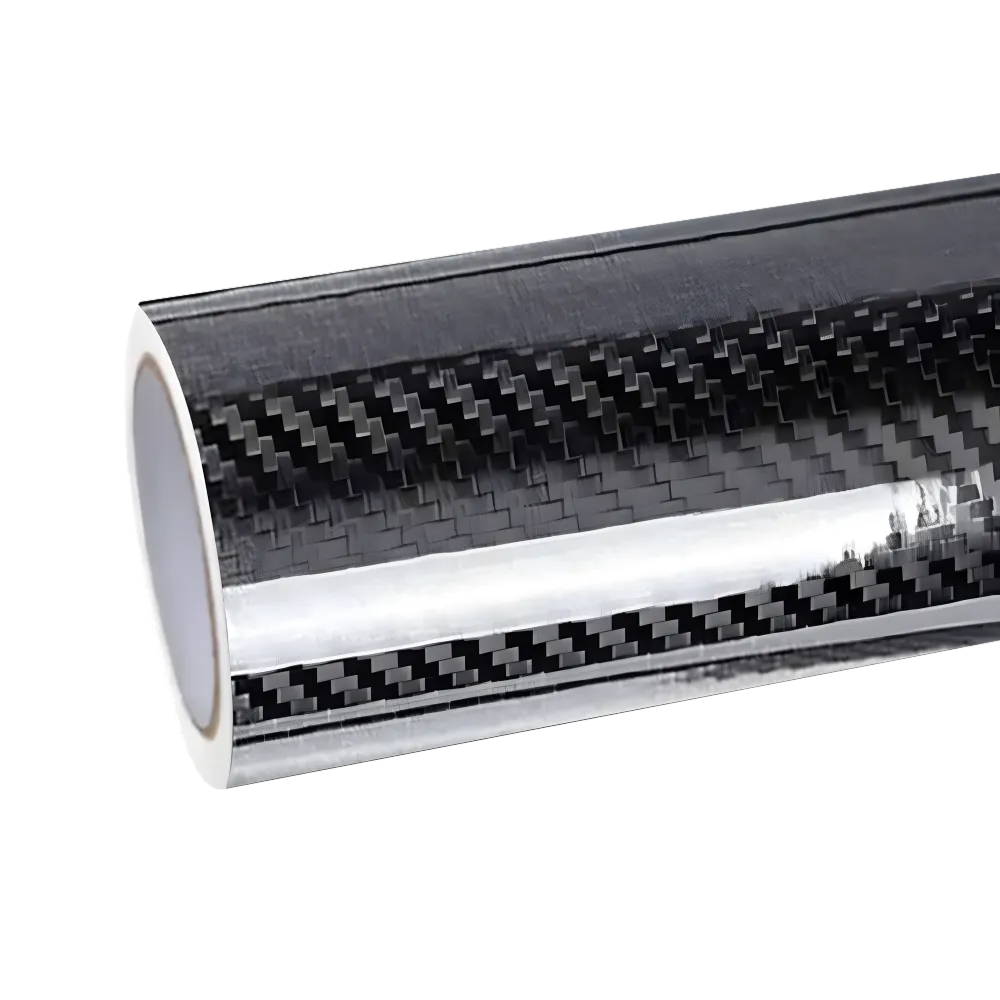
Quick answer: carbon fiber roof wrap is worth shortlisting when Decorative unless its own sheet says otherwise. Compare it with Matte carbon vinyl, approve a large sample in real lighting, measure the actual vehicle, and treat the current $189.99–$825.99 USD range as material-only context—not an installed quote.

Practical details for choosing a wrap
- Key detail: The linked product offers 5 ft-wide material in 10-79 ft lengths on the live USD page. Source: official source. Read 2026-08-03; roof still requires direct panel measurement.
Choose a carbon roof material
| Option | Appearance | Protection claim | Installation implication |
|---|---|---|---|
| Gloss 4D carbon vinyl | High-depth printed weave | Decorative unless its own sheet says otherwise | Direction must stay centered |
| Matte carbon vinyl | Lower reflection | Decorative | Sheen changes show stretch |
| Carbon-style PPF | Pattern plus product-specific protection | Only as documented | Different chemistry and install method |
The table is a screening tool. It does not turn one material family's specification into another's. Ask for the exact product data sheet and compare physical samples on flat and curved surfaces before approving a full vehicle.
Vehicle-size examples with a documented basis
compact electric sedan (Tesla Model 3)
185.8 in long and 72.8 in wide excluding mirrors in Tesla's current owner's manual (official source) Use as the lower-area full-wrap planning example; verify every panel and add handling allowance. Overall dimensions are a planning basis, not a substitute for measuring the hood, roof, bumpers, doors, bed, rails, spoilers and edge returns on the actual vehicle.
midsize electric crossover (Tesla Model Y)
188.7 in long and 75.6 in wide excluding mirrors in Tesla's current owner's manual (official source) Use as the taller crossover example where roof, hatch and bumper area increase material and labor. Overall dimensions are a planning basis, not a substitute for measuring the hood, roof, bumpers, doors, bed, rails, spoilers and edge returns on the actual vehicle.
Material price on August 3, 2026
The United States storefront showed a $189.99–$825.99 USD material range on August 3, 2026. The source was the live product record. This is a roll or variant range, not a professional installation quote. Taxes, local labor, disassembly, paint correction, freight exceptions and failed-panel allowance can change the project total.
Budget variables to record before ordering:
- roof width and length
- antenna or rail removal
- panoramic glass exclusion
- weave direction
- labor
A non-fabricated installation plan
Measure the painted roof only, add handling margins, decide antenna and rail treatment, and mark weave direction before the liner is removed. Basis: manufacturer instructional bulletin. Editorial roof-planning scenario grounded in documented measuring, clean-tool and product-sheet-first practice.
- Inspect paint, repairs, rust, clear-coat failure and trim before discussing adhesion.
- Define coverage: visible exterior only, jambs, roof, bed, spoilers, rails and removable parts.
- Measure every panel at its widest points and add handling margins before making a cutting map.
- Approve color and sheen in sun, shade and artificial light; photograph the approved sample as a reference.
- Clean and prepare only with methods allowed by the exact film and substrate documentation.
- Label roll direction and vehicle-front direction before cutting any metallic, pearl, carbon or color-shift material.
- Use heat, edge treatment and post-heating only as the purchased film's current instructions specify.
- Inspect edges, seams, recesses and finish consistency after the film cools, then document care and removal guidance.
Explore suitable wrap options
Browse WINWAYWRAP and compare these relevant choices:
Continue with these related guides:
How to read the finish on a real vehicle
Do not approve carbon fiber roof wrap from a phone screen alone. Hold a large sample vertically on a door, horizontally on a hood or roof, and across a curve. View it from the front, rear and both sides. The first table option, Gloss 4D carbon vinyl, is described here as High-depth printed weave; the second, Matte carbon vinyl, behaves differently because Lower reflection. That difference can be more important than the color name.
Small-vehicle and large-vehicle ordering logic
The compact electric sedan (Tesla Model 3) is the smaller planning example in this article, while the midsize electric crossover (Tesla Model Y) represents a different panel count or body form. A larger overall footprint does not translate directly into one multiplier: bumpers, tall hatches, pickup beds, removable roof pieces and directional waste consume film differently. Build a panel-by-panel cut list and reserve material from the same production lot for the most visible repair.
Three budget checkpoints
Material checkpoint: confirm width, length, finish and availability against the dated source. Preparation checkpoint: obtain a separate allowance for cleaning, correction and parts removal. Installation checkpoint: ask whether bumpers, mirrors, spoilers, sensors, bedsides or roof hardware require extra pieces or seams. Keeping these checkpoints separate prevents a low roll price from being mistaken for a complete project cost.
Direction and lot control
Record the roll label, lot, chosen vehicle-front direction and cutting order. Adjacent doors should not be rotated simply to save a short offcut if that rotation changes metallic flop, pearl travel, carbon weave or color shift. If the finish is not directional, written labels still help preserve repeatability during repair. Save a clean labeled offcut for future color matching rather than using every square foot.
Surface and edge decisions
Sound factory paint, refinished paint, textured plastic, rubber, glass and powder-coated parts are not interchangeable substrates. The installer should identify exclusions in writing. Decide whether edges wrap around, terminate at a body line or use an inlay. A visible, well-planned seam can be safer than stretching one piece beyond the exact film's documented conformability.
Care plan before purchase
Ask the manufacturer which cleaner, drying method, sealant and stain-removal process are compatible with the exact finish. A gloss product may reveal wash marks; satin and matte surfaces can show burnishing; chrome and high-gloss faces can record tool or towel contact. Park and wash conditions therefore belong in the buying decision, not only in the aftercare conversation.
Repairability test
Imagine one door, one roof edge or one bedside needs replacement. Ask whether the same color and production lot will be available, whether the replacement can follow the original direction, and whether aged adjacent panels will match. If a small repair would require rewrapping an entire side for visual consistency, include that risk in the finish comparison now.
Questions for the installer quote
- Which exact product and current technical sheet control the work?
- How much film is ordered, in what width, and what spare is included?
- Which parts are removed, masked, seamed or excluded?
- How are directional panels labeled?
- What paint conditions stop the job?
- What care, inspection and removal instructions will be delivered?
An editorial scenario: prioritize appearance
A buyer who values the strongest visual effect may accept the first table option despite its stated planning risk: Direction must stay centered. The responsible next step is a large sample and a written panel-direction plan—not an assumption that the most dramatic sample will behave identically across every curve and viewing angle.
An editorial scenario: prioritize ownership
A daily driver parked outdoors may prefer Matte carbon vinyl because its stated use is Decorative. That does not make it maintenance-free. The buyer should compare cleaning limits, horizontal exposure, repair matching and planned removal timing before treating a calmer appearance as the automatically safer option.
Why the lowest price is not always the lowest cost
A short roll can be appropriate for an accent but uneconomic for a full vehicle if it creates extra seams or forces a second order from another lot. Conversely, buying the longest option without a cut map can leave expensive directional offcuts. The better comparison is usable covered area after margins and waste, plus the labor needed to apply it correctly.
Final acceptance checklist
Inspect color consistency at panel boundaries, weave or flake direction, trapped contamination, edge security, planned seams and marks visible under side light. Confirm that badges, sensors, cameras, drains and moving parts function. Photograph the finished vehicle and retain the product name, lot, install date, care sheet and spare-film location.
Build a sample approval record
Write the product name, finish, sample date and lighting conditions beside three photographs: open sun, full shade and indoor side light. Note which trim, wheel and glass colors were present. This record does not guarantee the full wrap will look identical, but it gives the buyer and installer a shared reference when deciding whether a panel shows normal light travel or a direction error.
Frequently asked questions
Is carbon fiber roof wrap priced at $189.99?
$189.99 was the low end of the cited material listing on August 3, 2026. It is not a complete installed price and may represent a shorter roll or promotional option.
Can overall vehicle dimensions tell me exactly how much film to buy?
No. They make examples comparable, but the installer still needs a panel-by-panel cutting map, coverage definition and waste allowance.
Can I copy a temperature from this guide?
No. Use the purchased film's current technical sheet. The linked manufacturer bulletin supports the workflow, not a universal heat setting.
Should I choose the finish from an online photo?
No. Screen color, exposure and editing can hide undertone, sheen and directional behavior. Approve a physical sample in several lighting conditions.
What should remain after installation?
Keep the invoice, exact product name, lot record, care guidance, removal guidance and a labeled spare offcut when practical.
Decision
Measure and plan a carbon-fiber roof wrap without seams, weave mismatch or heat misuse by combining four records: the approved sample, the measured cut map, the dated USD material range and the exact technical sheet. If any one is missing, pause the order or keep the project as a draft quote. That approach protects the decision from attractive photos, incomplete pricing and borrowed specifications.
Share:
Carbon Fiber Hood Wrap Guide: Cost, Installation and Best Finish Options
Olive Green SUV Wrap Planning: Two-Door vs Four-Door Sizing, Finish and Cost